Is Solar Still Worth it Without the Tax Credit? Yes—Especially in Arizona
The 30% federal solar tax credit officially expired on December 31, 2025. A lot of homeowners are worried that missing the tax credit means missing their chance at a good deal for installing solar panels.
In Arizona, that simply isn’t true.
In APS and SRP territory:
The value of batteries under demand charges and TOU pricing is so strong that it keeps ROI nearly identical—even without the tax credit—while improving daily energy independence.
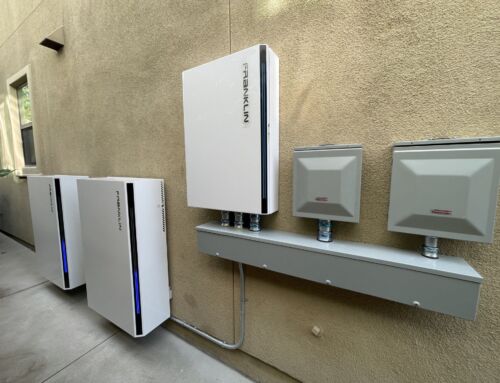
In fact, installing solar with a battery lets homeowners:
- Reduce their solar system size
- Utilize more of their solar production
- Eliminate on-peak grid usage
- Slash demand charges
- Protect their home during outages
Deep Dive into Arizona’s New Solar Economics
Arizona utilities, especially APS, have moved toward aggressive:
- Demand charges
- 4–7 pm on-peak windows
- High summer pricing
- Low export (net billing) values
In the past, APS would buy excess solar energy at around the same rate it charges for electricity. But that’s no longer the case. Today, export (aka net billing) rates are much lower. On top of that, APS and SRP have switched to demand-based pricing, which means electricity costs more in the evening, when your solar panels are not producing much power.
But that doesn’t mean solar panels aren’t valuable anymore. It actually gives them more value, even without the 30% solar tax credit.
Here’s how.
If you install a solar plus battery system, you can store solar energy generated during the day for later use. That means you can use more of your solar production at home instead of exporting it for pennies, and avoid peak utility pricing.
The savings add up fast. In some cases, the ROI on a solar plus battery system is higher than the ROI on solar panels alone, even without the 30% federal tax credit.
How Solar Batteries Make Up for the Tax Credit Loss
1. Demand Charge Reduction
APS demand charges (2025 schedules):
- Summer: roughly $19–$20 per kW
- Winter: roughly $13–$14 per kW
A typical home hits 4–6 kW of demand between 4–7 pm. A solar battery can shave that down to 0–1 kW.
That’s $60–$120/month of avoided demand charges during the summer alone.
2. TOU Peak Shifting (battery arbitrage)
Solar production drops sharply after 3 pm. Meanwhile, utility rates spike from 4–7 pm.
A battery bridges that gap by:
- Storing solar at noon
- Discharging during the most expensive hours
- Eliminating most on-peak energy usage
3. Less Solar Required
This is the part nobody talks about.
When you add a battery, you do not need as large of a solar array to achieve the same financial impact. That reduces your upfront cost, often significantly.
Solar-only systems must be oversized to produce extra midday energy that gets exported to the electric grid at low rates. Solar plus battery systems keep more of what they generate and use it at the most valuable times.
Real World Comparison: Solar-Only with Tax Credit vs Solar + Battery Without Tax Credit
Let’s take a look at a real-world example. We’ll compare a solar-only system that did qualify for the 30% solar tax credit to a solar plus battery system that did not qualify.
This example is for a home in APS territory. We can assume the following:
- 12,000 kWh annual usage
- Solar-only system: 8.5 kW
- Solar + battery system: 6.5 kW + 10–15 kWh battery
- Battery reduces on-peak demand by ~4 kW
- Export values are low, making self-consumption more valuable than export
| Metric | Solar Only with 30% Tax Credit | Solar + Battery Without 30% Tax Credit |
|---|---|---|
| System Size | 8.5 kW (solar only) | 6.5 kW solar + battery |
| Gross System Cost | ~$30,000 | ~$28,080 |
| Tax Credit | -$9,000 | $0 |
| Net Upfront Cost | $21,000 | $28,080 |
| Annual On-Site Solar Utilization | ~55% | ~85-95% |
| Demand Charge Reduction | None | ~4kW shaved ≈ $78/mo (summer) |
| Peak Energy Savings | Low | High |
| Estimated Monthly Bill Savings | $150-$170/mo | $240-$275/mo |
| 10-Year Utility Potential Savings | ~$16k – $18k | ~$28k – 32k |
| Estimated Break-Even Period | ~9-11 years | ~9-11 years |
Final Thoughts
Solar isn’t dead without the tax credit. It’s just evolving from solar-only to solar plus battery storage.
Batteries have become the most important part of system design in Arizona, not because of incentives, but because of how our utility rate structures are designed and used to charge customers.
The biggest mistake Arizona homeowners can make is assuming the ITC expiration means higher long-term costs. Under APS and SRP rate structures, system design matters more than incentives, and the right solar + battery configuration continues to deliver exceptional ROI.
SouthFace Solar & Electric has installed thousands of solar energy systems across Phoenix, Cave Creek, Carefree, Prescott, and beyond. We know the rate structures inside and out, and we size systems to maximize ROI, tax credit or not.
Custom System Design Matters More Than Ever
One of the most overlooked advantages of solar + battery systems is that they don’t force you to change how you use energy. This is a major reason customers love battery-backed systems and why they are so effective under APS and SRP rate structures.
But every home’s rate plan, load profile, and solar potential is different. A custom-engineered design is essential to ensure the system captures maximum demand-charge reduction and TOU value.
At SouthFace Solar & Electric, we evaluate usage patterns, EV loads, HVAC cycling, and roof geometry to size systems correctly for maximum savings.