What’s the Best Home Backup Generator for an Arizona Home?
Picking a backup generator is a lot like picking a truck. The “best” one isn’t the biggest one on the lot. It’s the one that can do the job you need it to do without making the rest of your life harder.
If your goal is to keep food cold, a few rooms usable, and essential medical equipment powered, that is one system. If your goal is to keep both air conditioners, the kitchen, the pool equipment, and the rest of the house available in July, that is a different system. The right conversation starts with the loads, not the badge on the enclosure.
Start with a load list, not a generator size
Write down what must work during an outage. Separate true needs from things that can wait. Refrigeration, selected lights and receptacles, internet equipment, a garage door, a well pump, medical equipment, and one cooling zone may belong on the first list. An electric oven, clothes dryer, pool pump, EV charger, and a second cooling system may be loads you manage rather than run at the same time.
Then collect the electrical information for each load. The running wattage matters, but it isn’t the whole answer. Motors and compressors can draw more power while starting than they use after they are running. An installer also has to consider which loads can start together, whether the loads are 120 or 240 volts, and whether automatic load management will keep the system from being overloaded. The National Electrical Code requires an optional standby system to have enough capacity for the loads it serves, or to use automatic load management so the connected load stays within the generator’s capacity.
This is why adding the wattage printed on a few appliances can give a false sense of precision. A proper load calculation looks at the home’s electrical service, the actual equipment, starting demand, and the loads that may overlap. If the plan includes central air conditioning, the installer should use the nameplate and starting information from the installed unit rather than a generic online estimate.
Essential circuits and whole-home service are different promises
An essential-circuit system supplies a selected group of loads through a dedicated backup section or a controlled set of circuits. It can keep the refrigerator running, power lights and outlets in chosen rooms, maintain communications, and serve equipment that the household has identified as necessary. Whether it can also run central air conditioning depends on the air conditioner, the generator, and what else is running.
In an Arizona summer outage, cooling usually drives the hard decisions. A plan that carries one cooling zone and the basic household loads is not the same as a plan that can start and run multiple air conditioners while other large loads are on. The homeowner should know which cooling equipment is included, which large loads will be blocked or shed, and whether any loads need to be turned off before another one starts.
“Whole home” should not be treated as permission to run every large electrical load at once. A broader system may connect to the main service and still use load management to pause lower-priority equipment when demand gets too high. Ask for a written list of what the system is designed to carry, what it will shed automatically, and what the household may need to manage during an outage.
The transfer switch is part of the decision
The generator is only one piece of the system. The transfer switch separates generator power from utility power. APS explains that a break-before-make transfer switch connects the building to either the generator or the utility system, never both at the same time.
That separation matters. APS warns that connecting a generator to building wiring without the required separation can back-feed electricity and create a potentially fatal shock hazard for utility workers. APS also says the transfer switch should be installed by a licensed electrician and requires a permit and inspection.
The switch location affects conduit routing, service access, and the amount of electrical work needed. The generator also needs a disconnecting means, and current electrical rules can require an outdoor emergency shutdown for a one-family or two-family dwelling. The installer and local inspector should settle those locations before the pad, gas line, and conduit route are committed.
Natural gas or propane in the Phoenix metro
Natural gas can be the simpler fuel arrangement when the property already has adequate service and the utility can support the added load. It avoids storing a large fuel supply on site. It does not remove the need for fuel planning. The installer still has to confirm service availability, meter capacity, delivery pressure, pipe size, and the distance from the meter to the generator. Southwest Gas advises customers to contact the utility before adding gas equipment so service and meter requirements can be checked.
Propane can serve a property without natural-gas service, but it adds a storage system to the project. The homeowner is committing space to a tank, a fill route for the supplier, fuel-level monitoring, and future deliveries. Tank size and expected electrical load affect how long the stored fuel can support the generator. A responsible proposal should not promise a runtime until the load, tank, and usable fuel capacity are known.
Propane also changes placement. NFPA 58 uses container size and installation type to set separation distances from buildings, property lines, building openings, and ignition sources. For common aboveground residential containers larger than 125 gallons and up to 500 gallons water capacity, the code table uses a 10-foot minimum separation from an important building and from a property line that can be built upon. Other opening, relief-valve, and ignition-source rules can affect the final layout. The propane supplier and local authority should approve the tank location before trenching starts.
Neither fuel is automatically best. Natural gas depends on service at the address and adequate delivery to the equipment. Propane depends on tank space, compliant setbacks, access for filling, and the household keeping fuel available. The site often makes the decision before the equipment does.
Placement and clearances need to be solved on paper first
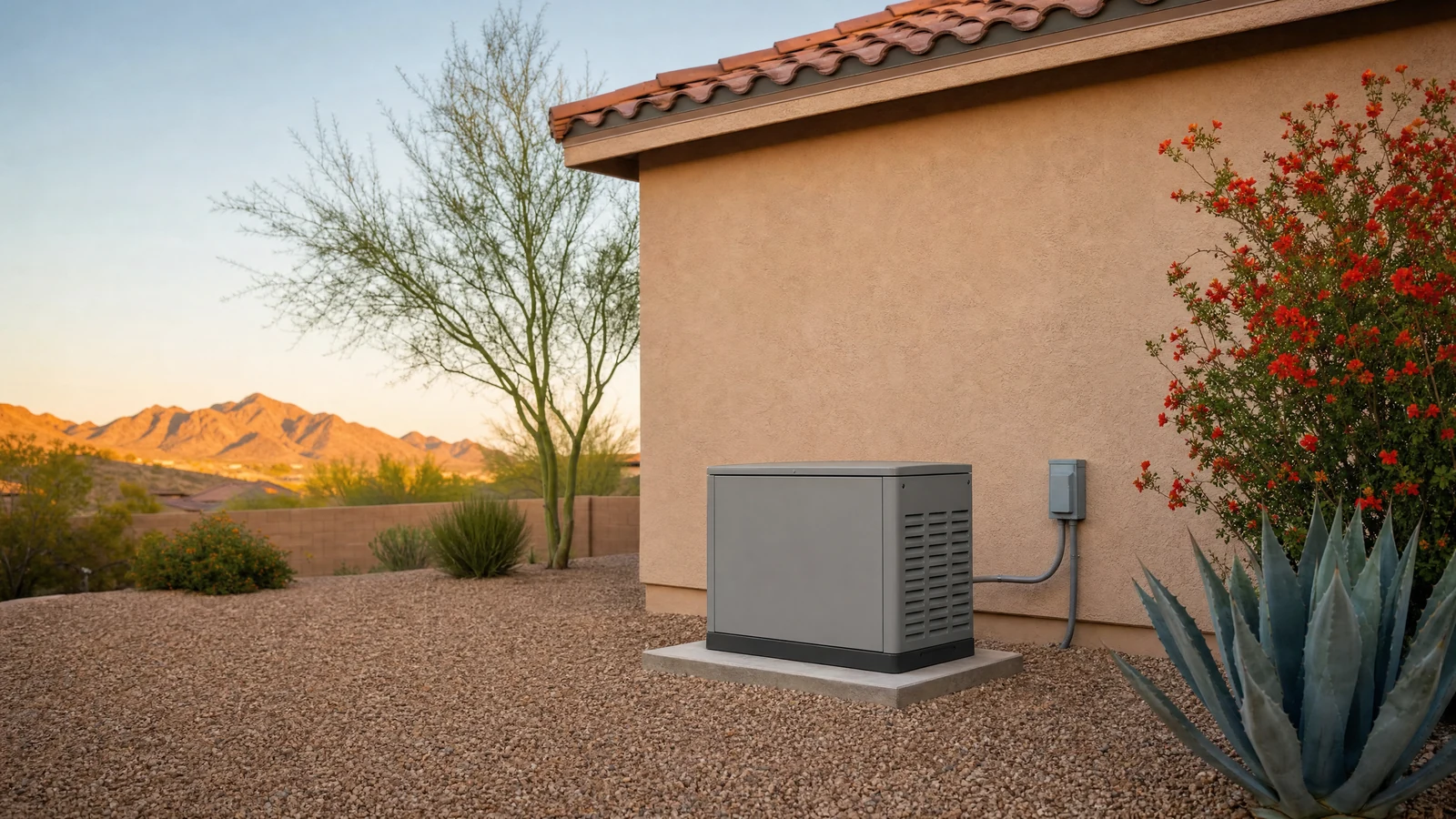
A standby generator cannot be placed wherever there happens to be an open patch of gravel. Exhaust, heat, combustion air, service access, fuel piping, electrical routing, drainage, property lines, and nearby building openings all affect the location.
NFPA 37’s basic outdoor rule starts with 5 feet of separation between an engine or its weatherproof enclosure and openings in walls. It also addresses separation from structures with combustible walls, openings, roof overhangs, and vegetation. The code contains exceptions for listed equipment and fire-resistance conditions, so 5 feet is a planning baseline, not permission to ignore the equipment listing or local amendments. Operable windows, doors, vents, and other air intakes need to be identified on the site plan before a final location is chosen.
Portable-generator advice is different and should not be borrowed for a permanent installation. The U.S. Fire Administration says a portable generator should run outdoors in a well-ventilated area away from doors, windows, and vents. The Consumer Product Safety Commission gives a more specific portable-unit recommendation: at least 20 feet from the house, with exhaust pointed away. A permanently installed unit follows its listing, fuel code, electrical code, and the local permit review.
The pad matters because the unit has to stay level, supported, and out of drainage paths. FEMA guidance for emergency power systems also calls for protecting generator equipment from flooding and other site hazards. In the Phoenix metro, the plan should account for roof runoff, irrigation, low spots, and monsoon drainage rather than assuming a dry yard stays dry.
Service access matters too. A location that technically fits but leaves no practical room to remove panels, reach the battery, or service the engine is a poor location. Ask the installer to show the required working clearances, the exhaust direction, the fuel route, the electrical route, and the service side of the enclosure on the plan.
What permitting and inspection should look like
A permanent standby installation normally touches more than one trade. The electrical work includes the transfer equipment, disconnects, grounding and bonding, circuit routing, and connection to the home’s wiring. The fuel work may include a new gas line, a meter review, or a propane tank and regulator. The pad and equipment location must also meet the adopted building, fire, fuel-gas, and zoning requirements that apply at the address.
The contractor should identify the authority having jurisdiction, prepare the plans, apply for the required permits, coordinate utility review when needed, schedule inspections, and correct any rejected work. The homeowner should receive the approved permit record, inspection signoff, equipment documentation, and a clear demonstration of system operation. APS specifically requires a permit and inspection for transfer-switch installations connected to a customer’s electrical system.
Expect the inspector to look at the installed work, not just the generator. Transfer equipment, conductor sizing and protection, grounding and bonding, shutdown and disconnect locations, fuel piping, clearances, and equipment access can all be part of the review. Requirements vary across Phoenix, Mesa, Scottsdale, Chandler, Gilbert, unincorporated Maricopa County, and other jurisdictions, so a permit from one city is not a template for the next.
Before work starts, ask one simple question: “Who owns each permit, utility coordination, inspection, and correction if the inspector finds something?” The answer should name the responsible contractor, not leave the homeowner to sort it out after installation.
Maintenance is part of owning the system
A standby generator spends most of its life waiting. That does not make it maintenance-free. The starting battery and charger need attention. Engine oil, filters, cooling components where fitted, air paths, fuel components, wiring, and the enclosure need inspection on the schedule for the installed equipment. Dust, heat, insects, and rodents can also create problems that are easy to miss when nobody opens the enclosure between outages.
Many standby systems run an automatic exercise cycle. That cycle confirms that the engine can start, but it does not prove that the generator can carry the home’s intended loads or that every transfer and load-management function will work during an outage. NFPA’s emergency-power maintenance framework distinguishes routine exercising from operational testing under load. A residential owner should follow the installed equipment’s schedule and have the complete system tested as recommended by the installer and equipment documentation.
The most ordinary parts can stop an otherwise healthy system from starting. A weak battery, a disabled switch, a charger problem, stale or interrupted fuel, a blocked air path, low fluid, or a missed service interval can leave the unit unavailable when utility power fails. FEMA’s emergency-power guidance calls for routine checks of batteries, fuel, fluids, cooling, exhaust, controls, and transfer equipment rather than treating the engine as the only item that matters.
After a long outage, record the run time and inspect the unit before assuming it is ready for the next one. Follow the equipment documentation for oil and filter service, and arrange service if the run pushed the unit to a required interval. Keep the area around the generator clear and do not stack belongings against the enclosure or block its airflow.
Owners should budget attention, not just equipment. Confirm who handles scheduled service, how fault alerts are reported, who responds if the unit fails an exercise cycle, and whether the transfer switch and managed loads are included in service. If ongoing care is nobody’s job, small problems can sit unnoticed until the outage.
What a generator does not do
A generator is not a battery. A battery stores electricity and can respond without starting an engine. A fuel-fired generator makes electricity while it is running and while its fuel supply is available. They solve different problems and may be used separately or together.
A generator also does not lower the electric bill. Its job is backup power during an outage. It does not create solar energy, change a utility rate plan, or erase normal grid use. If the goal is bill control, that needs a separate conversation about usage, rates, solar production, storage, and the way the home uses power.
It also does not make outage planning unnecessary. Fuel availability can change, equipment can need service, and a household may still need a plan for medications, heat exposure, communications, and an extended outage. APS recommends backup power for essential medical equipment as one part of a broader outage-supply plan.
Questions to settle before choosing
- Which loads must run, and which ones can wait?
- Which air-conditioning equipment will the system start and carry?
- What will be shed automatically when demand is high?
- Is natural-gas service available and adequate, or does the property need propane storage?
- Where can the generator, fuel system, disconnect, and transfer equipment be placed legally and serviced safely?
- Who is responsible for plans, permits, utility coordination, inspections, and corrections?
- What exercise, service, and post-outage checks does the installed system require?
- Who will respond if the generator reports a fault or misses an exercise cycle?
The straight answer
There is no universal “best” generator. There is a best-fit plan for the loads that matter, the fuel available at the property, the space the codes allow, and the way the household expects to live through an outage.
Ask for the load list, the fuel assumptions, the site plan, the permit responsibility, and the maintenance plan in writing. Those five items tell you more than a model number ever will.
If you want help thinking through the broader care side of your electrical and solar equipment, you can review our service plans.
Sources
- National Fire Protection Association, NFPA 70, National Electrical Code, Article 702 — optional standby-system capacity and automatic load management — nfpa.org/70
- National Fire Protection Association, NFPA 70, National Electrical Code, Article 445 — generator disconnecting means and emergency shutdown — nfpa.org/70
- National Fire Protection Association, NFPA 37 — outdoor engine and enclosure separation from structures and wall openings — nfpa.org/37
- National Fire Protection Association, NFPA 58 — propane-container location and separation distances — nfpa.org/58
- National Fire Protection Association, NFPA 110 — generator exercising, operational testing, and maintenance framework — nfpa.org/110
- APS — break-before-make transfer switches, back-feed hazard, and the licensed-electrician, permit and inspection requirement — aps.com/safety
- APS — outage preparedness, including backup power for essential medical equipment — aps.com/psps
- Southwest Gas — adding gas appliances and confirming service or meter requirements — swgas.com/en/additional-appliances
- U.S. Fire Administration — carbon-monoxide prevention and safe portable-generator operation — usfa.fema.gov/prevention/life-safety-hazards/carbon-monoxide
- U.S. Consumer Product Safety Commission — portable generators at least 20 feet from the home with exhaust directed away — cpsc.gov/Safety-Education/Safety-Education-Centers/Carbon-Monoxide-Information-Center
- Federal Emergency Management Agency, P-1019, Emergency Power Systems for Critical Facilities — generator siting, flood protection, inspection, testing, batteries, fuel, cooling, exhaust, controls, and transfer equipment — fema.gov/sites/default/files/2020-07/fema_p-1019_final_02-06-2015.pdf
Equipment options, fuel availability, placement rules, and local permitting requirements vary. The right answer depends on your property, your electrical service, the loads you need available, and the requirements of your jurisdiction.