By Corey Garrison — Owner, SouthFace Solar Published: June 8, 2026 · Last reviewed: June 4, 2026
Corey has worked on Arizona solar systems since SouthFace Solar opened in 2008. The team covers installation, service, repair, and manufacturer warranty navigation across the Phoenix Metro area (APS and SRP service territories) and the Prescott Tri-City area.
Short answer: Yes — solar still makes sense for Arizona homeowners after the federal residential clean energy tax credit ended. The current cash-purchase math just isn’t the only way to get a return on your investment anymore. The new answer that’s emerging is a prepaid Energy-as-a-Service lease option that lets a homeowner capture a bit more of the value still locked inside a solar purchase — value a homeowner usually can’t access directly with a traditional cash purchase. That value gets used to lower your upfront cost.
Here’s how I look at it, and I’ll be straight with you: going solar isn’t a one-and-done transaction — it’s the start of a long-term relationship, because we’re going to know your system for years. So when the rules change, like they just did with the tax credit, my job is to find the structure that still makes the numbers work for you — not to talk you into the same old deal.
If you’re still weighing whether solar makes sense at all now that the credit is gone, start with Is Solar Still Worth It Without the Tax Credit? — this article picks up where that one leaves off and focuses on the how: a specific structure that keeps the math working.
For Arizona homeowners in APS and SRP territory, the important question is no longer just, “Can I claim the federal tax credit?” It’s, “Is there an option I can leverage to push project economics into a higher ROI without me personally relying on the federal tax credit?”
What changed after the residential tax credit?
The IRS states that the Residential Clean Energy Credit equaled 30% of qualifying clean-energy property costs for systems installed from 2022 through December 31, 2025, and that the credit is not available for property placed in service after December 31, 2025. That’s a real change for homeowners who were counting on the traditional solar models — cash or financing — to do the cash-flow and ROI heavy lifting. In plain English: the homeowner-owned cash purchase got harder. It didn’t make Arizona solar irrelevant — it lowered the IRR on an installation, and cash-flow ROI isn’t as easy for some homeowners to hit. Bottom line: how you structure the purchase now matters more.
A new path: prepaid Energy-as-a-Service
SouthFace Solar and Electric has partnered with Suncheck to offer our clients a simple lease-to-own option — a prepaid service lease that works like this. Instead of buying the solar and battery equipment outright with cash, or financing the whole amount through a traditional lender and stretching the term to 20, 25, or even 30 years just to make day-one cash flow positive, the homeowner prepays for energy services while Suncheck owns and operates the system for the first five years.
As the system owner, Suncheck can work with value streams that are mostly impossible for a homeowner to use directly — tax-related value not available to homeowners, grid-services participation where available, environmental attributes, and referral or marketing value. In our review of the program, that often works out to roughly 19% lower than a comparable cash purchase for a typical Phoenix-area home. This isn’t a magic discount, and it isn’t a promise that every project pencils the same way. In fact, most pencil differently — the biggest factor is your location and eligibility.
Two homeowner benefits, kept separate
1. Lower upfront cost vs a cash or financed purchase — often around 19% lower for a typical Phoenix-area home (the exact amount depends on your location and program eligibility). During the first five years Suncheck owns and operates the system. At the end of that five-year period the homeowner chooses to either return the system at no cost, or buy it at fair market value.
2. A separate one-time services payment — paid directly to the homeowner as a one-time cash payment for hosting, access, data connectivity, grid-services cooperation, and optional marketing/referral cooperation. It’s not paid at signing — and it’s not guaranteed earlier than 180 days or later than 365 days after installation and PTO. It’s not a rebate, discount, tax credit, or ownership transfer. As the agreement puts it, the services payment is a general unsecured obligation of Suncheck — not money held in escrow — and Suncheck’s ability to pay is subject to market conditions and general credit risk. That’s why we’d rather walk you through it based on your specifics than overstate or oversell it.
So what happens at the end of five years?
You choose. Suncheck removes the system and performs reasonable site restoration at no cost to you, or you buy the system at its fair-market-value buyout. Before you sign, your agreement spells out your end-of-term choices and how that fair-market-value buyout is set — so the end-of-term math is on the table up front, not a mystery later.
Why this can fit Arizona
APS: most solar homes stay grid-connected, keep a monthly bill, and may earn bill credits for excess energy. SRP: publishes residential interconnection steps for connecting solar safely. We keep this conversation local — APS and SRP projects, Arizona homes.
What equipment is involved?
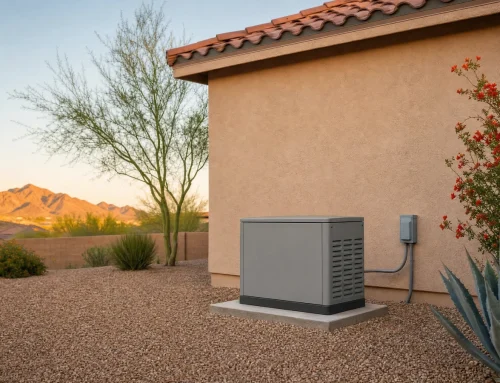
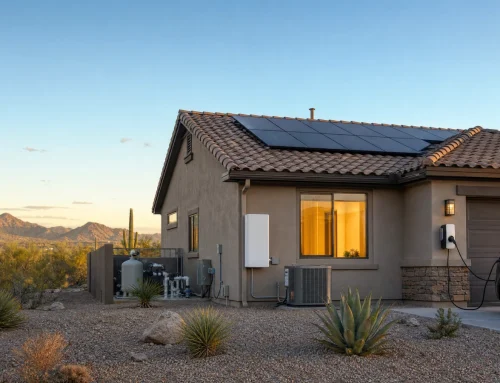
A Fox ESS inverter and storage stack (AIO or Split, with the HUB). Public Fox ESS materials describe the PowerQ AIO and Fox Hub. We’ve installed many of these systems, and our customers have had strong results covering backup loads and reducing demand. The homeowner takeaway: this is built around a defined, proven platform — not a vague equipment mix.
One more thing: this isn’t a forever option
This structure runs on a limited pool of qualifying equipment. When that allocation is used up, this particular option goes away — so it’s not something that will be on the table indefinitely. If it’s something you’re weighing, it’s worth looking at sooner rather than later.
What this is NOT
- Not a homeowner tax-credit promise
- Not a no-cost offer
- Not a fixed cash-payment promise
- Not a guaranteed-savings claim
- Not a way to skip PTO or interconnection
Disclaimer: Program details described here are accurate as of the publication date and are subject to change. The terms of your individual signed agreement control. Actual costs and benefits vary by project and location, and Suncheck does not guarantee savings or tax outcomes.
FAQ
Is solar still worth it in Arizona after the tax credit ended?
Yes, for many homeowners — it just depends more on how you structure the purchase. The federal residential clean energy credit isn’t available for property placed in service after December 31, 2025, which made the traditional cash-purchase math harder. A prepaid Energy-as-a-Service lease is one way to keep project economics working without relying on that personal tax credit.
Is the Suncheck prepaid lease the same as buying my system?
No. You prepay for energy services rather than buying the equipment outright, and Suncheck owns and operates the system for the first five years. At the end of that term you choose to either return the system at no cost or buy it at fair market value.
When is the separate services payment made?
It’s a one-time cash payment made no earlier than 180 days and no later than 365 days after the system receives Permission to Operate (PTO) — not at signing. It’s not a rebate, discount, or tax credit, and it’s a general unsecured obligation of Suncheck, so it’s worth understanding the timing and credit-risk details before signing.
Can SouthFace tell me whether this fits my home?
Yes. Because the numbers depend heavily on your location and program eligibility, the best next step is a conversation about your specific home in APS or SRP territory.
Bottom line: whether a prepaid lease, a cash purchase, or financing makes the most sense comes down to your home, your rate plan, and what you’re after. I’d rather walk you through that honestly than hand you a one-size-fits-all answer — and then be here for the long haul once it’s on your roof.