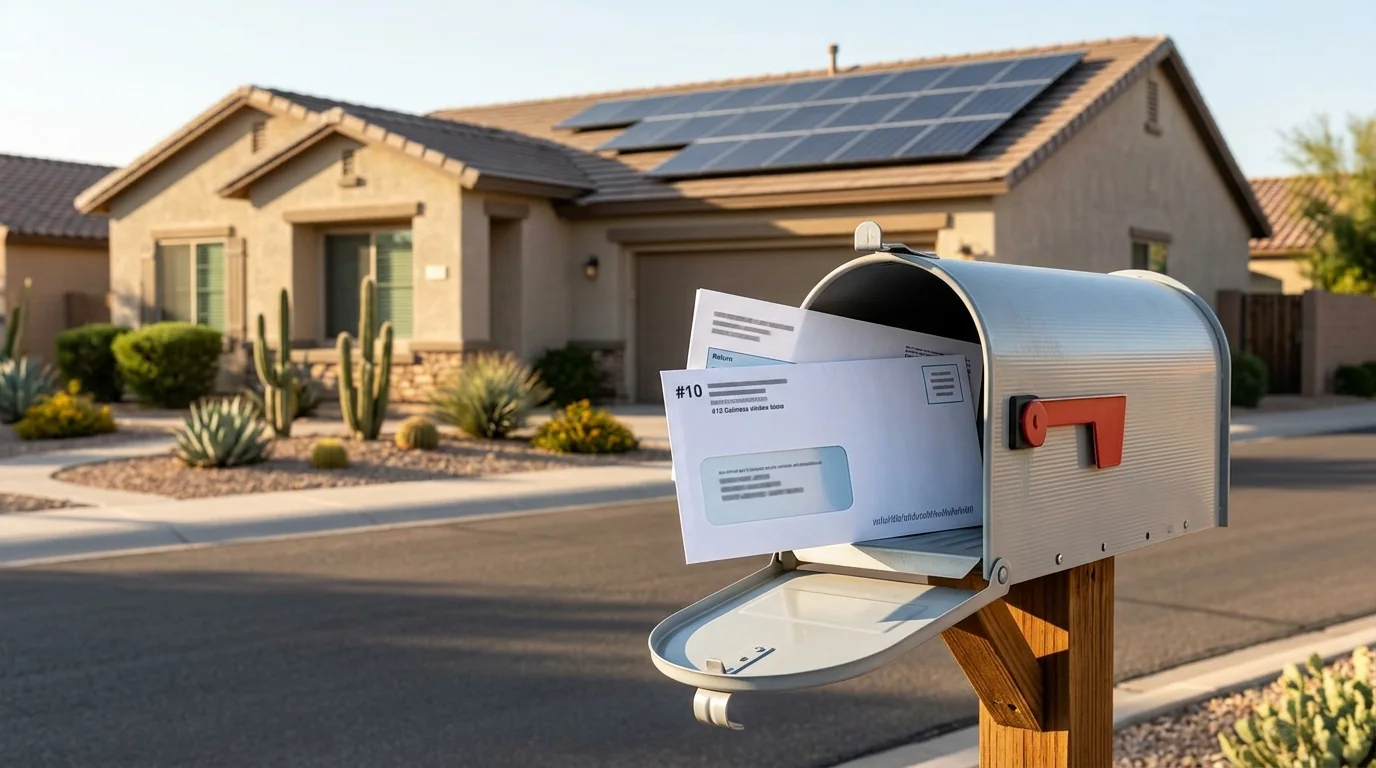
For most people, the electric bill is the alarm system. Bill stays
low — everything’s fine. Bill jumps — now you’ve got questions.
Here’s the problem. By the time the bill tells you your solar is
underproducing, the damage is already weeks old. Maybe months. The bill
is a terrible early-warning system, and it’s worth understanding why
before you lean on it to tell you whether your system is working the way
it should be working.
The bill is a lagging signal
Your APS or SRP statement shows up after the fact. It adds up a whole
month of energy, nets it against what your panels sent back, and lands
in your inbox weeks later.
So if a panel quit on the 5th, you don’t feel it until the statement
comes — and even then, only if the drop was big enough to stand out
against everything else moving around in that bill.
A power plant on your roof — and the battery on your wall — deserve a
better gauge than a receipt that shows up a month late.
The bill is also a noisy
signal
Even when it does arrive, the bill blends together a bunch of things
that have nothing to do with whether your panels are healthy:
- Your usage changed. A brutal heat week, more AC,
family in town — your consumption swings month to month. - Rates changed. APS and SRP move rates and
time-of-use windows around. A higher bill can be a rate story, not a
solar story. - The season changed. Winter production is naturally
lower than summer. A weaker month can be completely normal.
And if you’ve got a battery, the picture gets even foggier. A battery
shifts power around — charging off your panels, discharging during the
expensive afternoon hours — so the dollar figure on your bill can stay
flat even while production quietly drops. The battery is doing its job
covering for the panels, which is great, right up until it’s hiding a
problem you’d want to know about.
Because all of that is baked into one number, a system that’s
genuinely underproducing can hide inside a bill that looks “a little
high, but it’s been hot.” You shrug. The loss keeps running.
“It was good, and then
magically it wasn’t”
This is the one we hear most. The system worked great, the bills were
low, life moved on — and then one true-up, or one summer, the number
stings, and nobody can say when it actually started slipping.
It started slipping long before the bill showed it. The bill was just
the last to know.
What’s
actually happening while the bill stays quiet
In Arizona, the usual suspects all do their damage quietly:
- Dust and soiling trim output a few percent at a
time. - A failed microinverter or optimizer takes one part
of the array offline while the rest keeps going. - An inverter fault can cut production hard —
sometimes with the app still showing green if nobody’s watching it. - A battery that’s not charging or discharging right
can quietly stop doing its job — backup when you need it, or offsetting
utility demand charges (demand shaving/shifting) the rest of the time —
so it stops earning you the savings you’re paying for, and you’d never
see it in one flat bill.
None of these trip a loud alarm. They just make your meter run a
little more in their direction and a little less in yours — and the bill
quietly soaks it up for a month or more.
A better way to catch it
early
You don’t have to let the bill be your alarm. A couple of habits get
you out ahead of it:
- Check production monthly, against the same month last
year. That compares like-for-like and ignores the rate and
usage noise. - Look for clear-sky days with little or no
production. That’s a hardware problem the bill won’t explain
for weeks. - When a bill does jump, separate the causes. Ask
whether usage, rates, or season can explain it before you assume the
panels are fine — and if they can’t, treat it as a production question,
not a billing one.
The honest catch is the same one from the rest of this series.
Telling “normal seasonal dip” from “something’s actually wrong” takes a
benchmark for what your system should be doing — and with a battery in
the mix, what it should be saving you. That’s the piece most homeowners
don’t have sitting on hand.
When the bill has you
guessing
If your bill crept up and you can’t tell whether it’s the panels, the
battery, the rates, or just the summer, that’s exactly the question
worth handing to someone who looks at this every day.
A $129 diagnostic brings a certified local
technician who can review your data remotely or come out to your system
if it’s needed. The way we work it: we research and resolve remotely
first, and only send someone to your roof if we have to — so the tech
already knows what they’re walking into. It covers a remote read, and if
we do come out, the trip plus the first 30 minutes on site. We pull the
real production numbers and check the hardware — panels, inverter, the
battery if you’ve got one — and tell you straight whether your system is
healthy or quietly losing you power. Standard hourly applies after the
first 30 minutes on site, only if there’s real work to do.
We monitor and manage 500+ systems across Arizona, so we can tell a
rate-and-weather bill from a genuine production problem — the one
distinction your statement can’t make for you.
SouthFace Solar & Electric has served metro Phoenix and the
Prescott Tri-City area since 2008. Locally owned, licensed, and happy to
work on systems we didn’t install. ROC #249187. 4.6 stars on Google.
Bill went up and you’re not sure why? Call 480-405-6105 or
schedule a diagnostic — we’ll find out whether it’s your system or your
rate plan.
📚 Part of our series on reading your solar data. Start with the overview: You Spent $30,000 on Solar. Do You Even Know If It’s Working?.